
St. Michael’s Parish
Bristol, Rhode Island
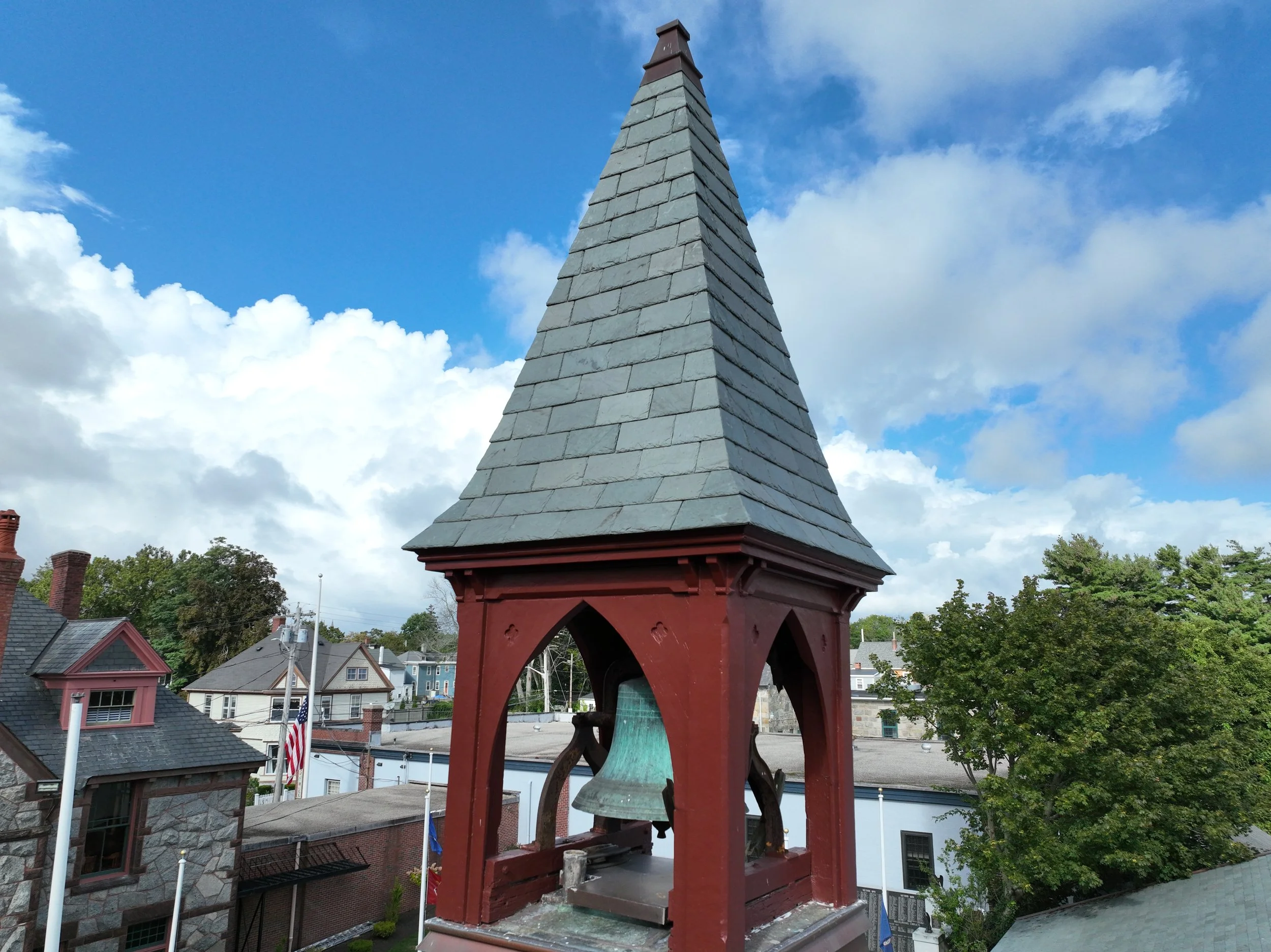
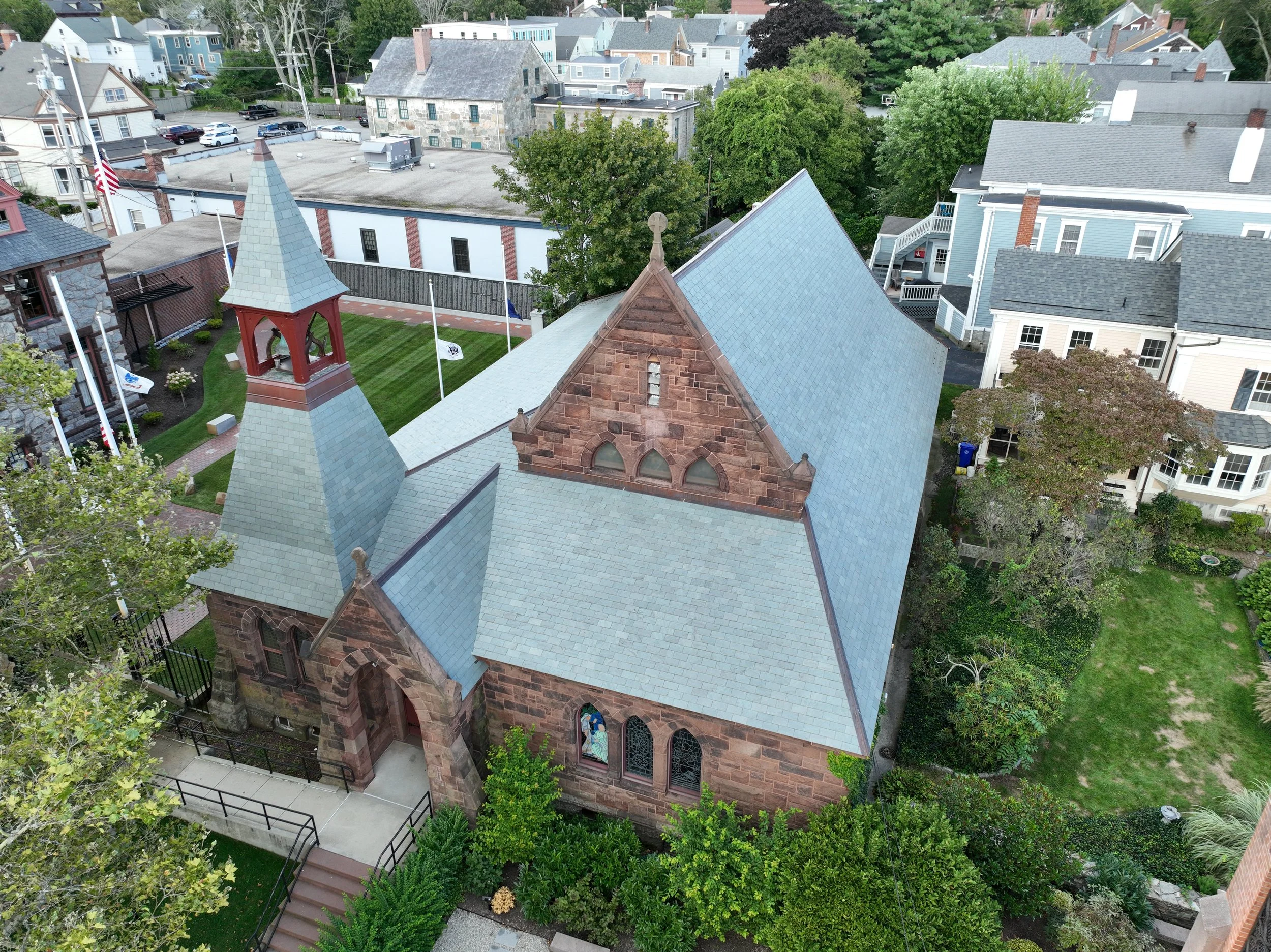
St. Michael’s Parish has long been part of Bristol’s architectural rhythm — a stone‑and‑timber church shaped by the town’s maritime heritage and the craftsmanship traditions that define the East Bay. Built between 1859 and 1861, the current church was designed by Lawrence B. Valk and Alexander Saeltzer, a New York architectural partnership known for their Gothic‑influenced ecclesiastical work. Their design gave St. Michael’s its distinctive character: steep slate rooflines, pointed‑arch forms, and carved wood details that feel anchored to Bristol’s waterfront identity.
Slate & Copper Services was asked to restore exterior elements that had begun to show the effects of salt air, seasonal storms, and decades of service. The project centered on slate roof restoration, supported by custom copper fabrication, targeted architectural sheet metal work, and selective preservation carpentry. St. Michael’s required a restoration approach that balanced structural reinforcement with respect for the building’s textured, handcrafted aesthetic.
The slate roof presented the first challenge. Its steep pitches and long runs demanded careful removal, sorting, and integration of salvaged slate, paired with new material selected to match the original coursing and surface texture. The goal was not simply to replace worn components but to reestablish the crisp geometry that defines the church’s roofline.
Copper played a central role in the restoration. Flashings, valleys, and gutter assemblies were fabricated to match historic profiles, with hand‑formed seams and soldered joints designed for long‑term performance in coastal Rhode Island. These details are subtle from the ground, but they are essential to the building’s durability — a quiet layer of protection that respects the church’s original design intent.
Selective carpentry work addressed aging trim, window surrounds, and steeple‑adjacent wood elements. Each repair was executed using preservation‑appropriate methods, reinforcing the structure without altering the visual language that makes St. Michael’s one of Bristol’s most recognizable landmarks.
Restoring St. Michael’s Parish meant working with a building that has weathered more than a century of coastal wind, salt air, and seasonal storms — conditions that shape how stone, slate, copper, and wood behave over time. Our team approached the project with the same discipline we bring to complex coastal restorations throughout Rhode Island: understand the building’s history, respect its materials, and execute each detail with precision. The completed work reinforces the church’s durability while preserving the character that has made St. Michael’s a visual and cultural anchor in Bristol for generations.